



9th Nov 2025
Mould Resistant Paint: Does It Actually Work?
Mould resistant paint is often seen as a quick fix for mould problems, but it doesn’t work in every situation. This guide explains when mould resistant paint is effective, when it won’t help, and how to use it properly for long-term results.
Mould resistant paint is often seen as a simple, permanent solution to mould problems, especially in bathrooms, laundries, kitchens, and bedrooms. But while it can help reduce mould growth, it doesn’t fix the underlying causes like condensation, poor ventilation, or damp.
If you’ve had mould return after cleaning, you might be wondering whether it’s worth using. The truth is: it can be highly effective in the right conditions, but disappointing in the wrong ones.
In this guide, we’ll explain what it is, when it works best, when it won’t help, and how to get the best long-term results.
Before painting, it’s important to remove existing mould properly. See our step-by-step guide on how to remove mould from walls.
Quick Answer: Does Mould Resistant Paint Work?
Yes, mould resistant paint can help prevent mould growing on the surface of walls and ceilings, but it works best when the wall is clean, completely dry, and the moisture problem (like condensation or poor ventilation) is under control.
It won’t fix damp, leaks, or mould growing underneath paint.
What Is Mould Resistant Paint?
Mould resistant paint (sometimes called anti-mould paint) is a coating designed to make it harder for mould to grow on painted surfaces. It usually contains additives that help prevent mould spores from settling and developing on the paint film.
This makes it especially useful in moisture-prone rooms where condensation is common, such as bathrooms and laundry areas.
However, this type of paint works on the surface layer only. It does not remove mould already present beneath paint, and it cannot solve moisture problems in the room.
How Does Mould Resistant Paint Work?
Mould thrives when moisture sits on a surface for long periods. These coatings help by making the surface less favourable for mould growth.
It’s most effective when:
• the room has occasional humidity (not constant damp)
• the wall can dry out properly between moisture events
• ventilation and airflow are decent
In other words, it’s a preventative layer, not a cure.
When Mould Resistant Paint Works Best
This can be a smart choice if mould tends to appear in predictable “high moisture” areas, such as:
- Bathrooms (especially ceilings and above showers)
- Laundry rooms
- Kitchens (near cooking steam areas)
- Bedrooms with frequent condensation on windows
- External-facing walls that get cold in winter
It works best when the mould problem is mostly driven by everyday condensation and humidity, rather than serious damp or leaks.
Tip: It’s especially useful for homes where mould appears lightly in winter, then improves in warmer months.
When It Doesn’t Work (or Fails Quickly)
It usually won’t perform well if the wall is still damp underneath, or if the moisture problem hasn’t been fixed.
Common reasons it fails include:
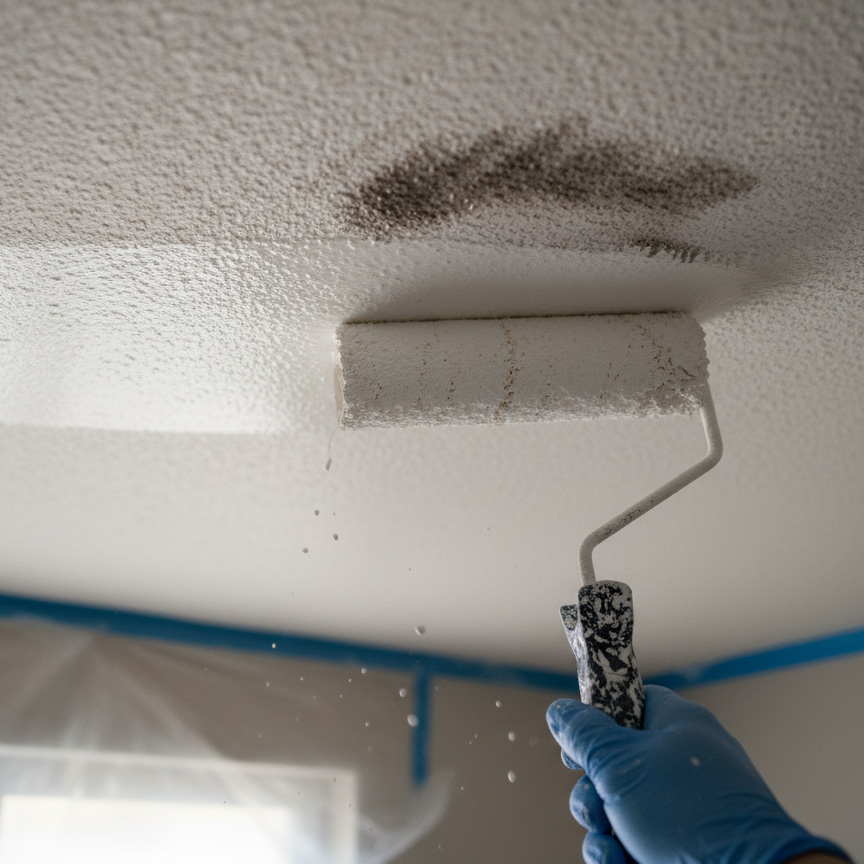
Painting over active mould
If mould hasn’t been removed properly, it can continue growing beneath the paint layer, sometimes reappearing through stains, spots, or peeling paint.
Damp or leaks behind the wall
If there’s a leak, rising damp, or ongoing moisture inside the wall, it won’t stop mould returning because the surface stays wet.
Poor ventilation and constant condensation
In rooms with heavy steam and no ventilation, moisture may build up faster than the paint can resist. The paint may slow mould growth, but it won’t prevent it entirely.
In short: it helps most when moisture is under control, but it won’t compensate for constant damp conditions.
For more official guidance on damp and mould in the home, including health risks and prevention advice, you can read this GOV.UK resource on damp and mould health risks.
Do You Still Need to Clean Mould Before Painting?
Yes. Even the best anti-mould paint won’t solve the problem if mould is still present underneath.
To get a long-lasting result, the wall should be:
- mould-free
- cleaned properly
- completely dry before painting
Use our full step-by-step method here: how to remove mould from walls.
Best Places to Use It (and Where to Avoid It)
It is best suited to:
- walls and ceilings in humid rooms
- areas near windows where condensation forms
- corners or cold spots that tend to get light mould growth
It may not be ideal for:
- surfaces with active water ingress (leaks)
- untreated damp patches
- areas where the wall feels cold and wet most of the time
If the paint keeps failing in one exact spot, it’s worth investigating whether moisture is trapped inside the wall.
Our Professional Opinion: What Most People Get Wrong
Our professional opinion: mould resistant paint can be a great finishing step, but it shouldn’t be the first step.
The biggest mistake we see is using it to cover up a mould problem without improving ventilation or fixing condensation. In those situations, the paint might look good for a short time, but mould often returns because the room environment hasn’t changed.
For the best long-term results, focus on moisture control first (airflow, ventilation, reducing humidity), then use it as added protection.
Frequently Asked Questions About Mould Resistant Paint
Does mould resistant paint stop mould completely?
It can help reduce mould growth on the surface, but it won’t always stop mould completely, especially if the room has high humidity, poor ventilation, or ongoing damp. It works best when moisture is under control.
Can you paint mould resistant paint over mould?
No, you shouldn’t apply it over active mould. The mould needs to be cleaned and treated first, otherwise it can continue growing underneath the paint and may reappear through staining, bubbling, or peeling.
Does mould resistant paint work in bathrooms?
Yes, it can work well in bathrooms because these rooms are prone to steam and condensation. However, it’s most effective when combined with good ventilation, such as extractor fans and airflow after showers.
Is mould resistant paint waterproof?
No, it is not waterproof. It helps resist mould growth on the surface, but it won’t stop water from entering walls or fix damp caused by leaks or moisture trapped underneath the surface.
How long does mould resistant paint last?
It depends on the room conditions, but it can last for years when applied correctly to a dry, mould-free surface and combined with good ventilation. In very humid or poorly ventilated spaces, it may be less effective over time.
Do you need a primer before mould resistant paint?
Some products can be applied directly to clean, dry surfaces, while others work better with a suitable primer or sealer. It’s always best to follow the manufacturer’s instructions and ensure the wall is properly prepared before painting.
Why does mould come back even after using mould resistant paint?
Mould often comes back because the underlying moisture issue hasn’t been solved. If condensation, leaks, or damp are still present, it may slow regrowth, but it won’t prevent mould long-term without moisture control.
Final Thoughts: Is Mould Resistant Paint Worth It?
Mould resistant paint is worth using if you’ve already removed mould properly and you’re trying to prevent it coming back in moisture-prone rooms. It can help reduce surface mould over time and make problem areas easier to maintain.
But if mould keeps returning quickly, spreads across large areas, or appears on damp patches, it’s usually a sign that the underlying moisture issue needs addressing first.
For the full cleaning and prevention process, read our guide on how to remove mould from walls.
From mould removers to prevention solutions, using the right products is key. Find your local Get Kitted Out Approved Stockist, where experienced staff can help you choose the right kit for the job.